


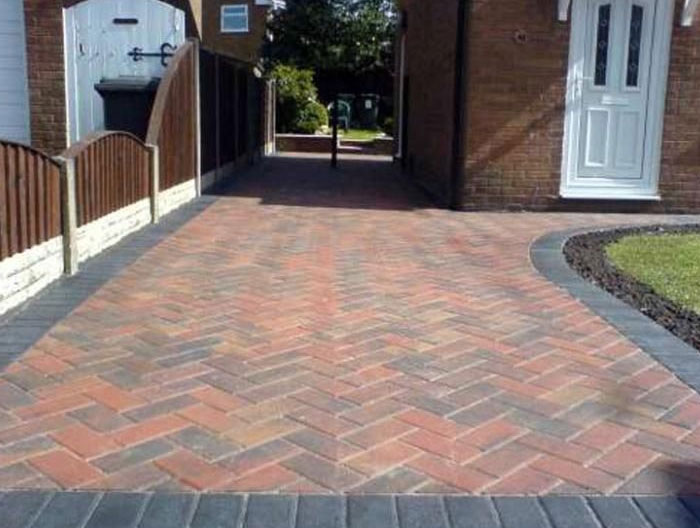
A new driveway is one of the bigger investments you will make in your home, so it makes sense to want one that lasts. The short answer is that a properly installed block-paving driveway will usually outlast the alternatives, often lasting 25 years or more. The longer answer is that the material is only half the story. How well the ground underneath is prepared matters just as much as what goes on top.
Below, we compare the main driveway types we install across Darlington, Durham and Teesside, roughly how long each one lasts, and what you can do to get the most from yours.
Why the Sub-Base Matters More Than the Surface
Every driveway sits on a sub-base of compacted crushed stone. Its job is to distribute the weight of your vehicles and allow water to drain away. If it is too shallow or poorly compacted, even the best surface will sink, rut or crack within a few years.
This is especially true in the North East. Our winters bring plenty of freeze-and-thaw, and water that gets into weak surfaces freezes, expands, and opens up cracks a little more each time. A deep, well-compacted base with proper drainage is the best protection there is. It is also a part of the job that some installers rush, because nobody sees it once the driveway is finished.
So when you compare lifespans, remember that every figure assumes the groundwork has been done properly.
Block Paving: The Longest-Lasting All-Rounder
Well-laid block paving regularly lasts 25 years or more, and many driveways go well beyond that. The blocks interlock and sit on a bed of sand, which lets the surface flex slightly under load without cracking.
Its biggest advantage for longevity is that it can be repaired piece by piece. If a section sinks, or a block gets stained or damaged, we can lift and relay that area without touching the rest. Few other surfaces can be put right so easily.
Upkeep is simple. An occasional jet wash, topping up the jointing sand and keeping weeds out of the joints will keep it looking smart for years. Applying a sealant can help lock the sand in place and protect against oil stains. Permeable block paving is also available if you need water to drain through the surface.
Resin Driveways: Long-Lasting and Low-Maintenance
A resin-bound driveway typically lasts between 15 and 25 years. Where it lands in that range depends on the quality of the resin, how well it was mixed and laid, and the base underneath.
Resin-bound surfaces are smooth, hard-wearing and permeable, so rainwater drains straight through. They resist weeds and need little more than a sweep and the occasional wash. Using a UV-stable resin helps stop the colour fading or yellowing in sunlight.
The main weak point is the base. Resin is often laid over existing tarmac or concrete, and if that surface is already cracked or moving, the cracks will come through in time. It is also worth knowing the difference between resin-bound and resin-bonded. Resin-bound mixes the stone into the resin for a smooth, solid finish. Resin-bonded scatters loose stone over a layer of resin, which wears and sheds stone sooner.
Tarmac Driveways: Hard-Wearing and Cost-Effective
A good tarmac driveway usually lasts around 15 to 20 years. It is tough, handles heavy vehicles well and is one of the quickest and most affordable surfaces to lay.
Over time, tarmac oxidises and fades from black to grey, and it can soften slightly in hot weather. Fuel and oil spills can also break it down if left. Where the base is weak, it may crack or develop potholes. The good news is that worn tarmac can often be resurfaced rather than fully replaced, which adds years to its life at a lower cost.
Gravel and Shingle: Easy to Refresh, but Needs Topping Up
Gravel is the most affordable option and drains freely, but it is not a fit-and-forget surface. A well-built base can last many years, while the gravel itself needs raking regularly and topping up every few years as stones get kicked out or pressed in. Gravel stabilising grids help hold the stones in place and stop ruts forming.
A Quick Note on Planning Rules
In England, paving more than five square metres of a front garden with a hard surface that drains onto the road needs planning permission. Permeable options such as resin-bound, gravel and permeable block paving avoid this, as does directing rainwater onto a lawn or border. It is worth bearing in mind when you choose a material, and we are happy to talk it through.
So, Which Driveway Lasts the Longest?
For most homes, block paving gives the longest life, at 25 years or more. Resin-bound follows closely at 15 to 25 years. Tarmac typically lasts 15 to 20 years and can be resurfaced to extend its lifespan. Gravel can last a long time with regular care, but it needs the most ongoing attention.
Whichever you choose, three things decide how long it really lasts: a properly built sub-base, good drainage and quality materials. A little regular maintenance, such as clearing leaves, dealing with spills quickly and keeping joints and edges in good order, will go a long way too.
Get Expert Advice on Your New Driveway
At RT Drives & Patios (NE) Ltd, we have spent 20 years building driveways across Darlington, Durham, Middlesbrough and the surrounding areas. We handle every job from start to finish with our own team, never subcontractors, and all of our work is fully guaranteed.
If you are weighing up block paving, resin or tarmac, we will happily help you choose the right material for your property and budget. Call us on 01325 589089 or get in touch online for a free, no-obligation quote, which comes with a 14-day cooling-off period for your peace of mind.